
Proper swimming pool light placement does more than just brighten the water. It transforms your entire backyard, boosts safety, and creates a striking ambiance for night swims or outdoor gatherings. But many pool owners struggle to figure out exactly where those lights should go.
If you’re planning a new pool or upgrading your lighting setup, getting the right swimming pool light layout is essential. In this guide, you’ll learn where to install pool lights for the best coverage, safety, and mood. We’ll also look at the most efficient lighting options, including LED pool lights and spa lights, to help you make a smart, long-lasting choice.
Let’s walk through the best strategies to illuminate your pool and surrounding yard for maximum effect.
Why Pool Light Placement Matters More Than You Think
The number one mistake pool owners make is thinking one or two lights are enough. The truth is, proper lighting is about balance ensuring there’s sufficient coverage, reduced glare, and safe visibility around every part of the pool and deck.
Good Lighting Serves Several Purposes:
- Safety: Well-positioned lights along steps, the pool path, and entry points reduce the chance of accidents.
- Mood: Outdoor lighting can set the right tone, relaxing, vibrant, or elegant.
- Functionality: When installed correctly, lights enhance how you use your space after dark.
- Aesthetics: Lights highlight features like the spa, deck, or water features.
Installing swimming pool lights is not just about visibility. It’s about creating an experience. To do that, you need a plan.
Where Should Swimming Pool Lights Be Placed?
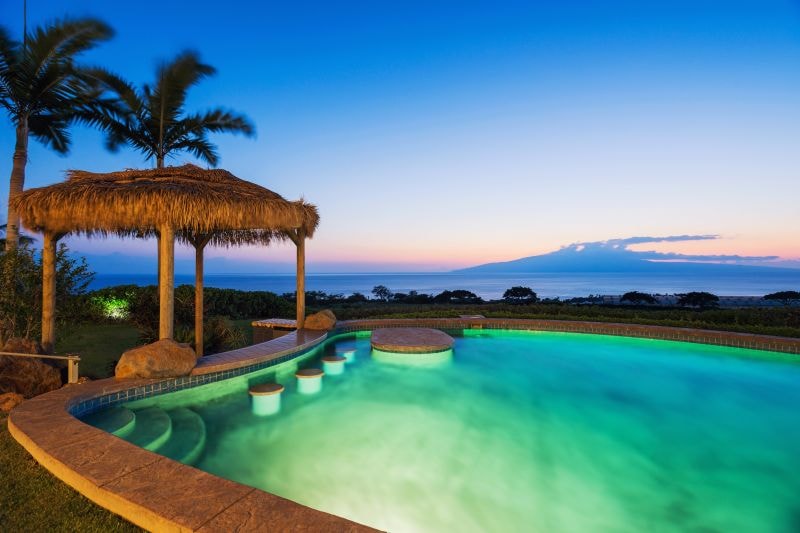
Choosing the right placement for your swimming pool light setup is key to getting the best visibility, mood, and coverage. It’s not just about where the lights go, it’s about how they work together to enhance safety, ambiance, and function around your pool, spa, and deck.
1. In-Wall Pool Lights: Strategic Underwater Placement
For in-ground pools, the most common approach is to install LED pool lights in the walls below the waterline. These lights should shine across the width of the pool, not directly at the house or sitting areas, to avoid glare.
Best practice: Space in-wall lights 6 to 8 feet apart for even coverage. Use at least one light for every 200–250 square feet of water surface.
Pro tip: For dark pool interiors or deeper pools, use more lights or increase lumens for sufficient brightness.
2. Spa Lights: Adding Focus to Attached Spas
Attached spas benefit from focused spa lights. Since they’re often used for relaxation, lower-intensity LED lights or color-changing models can enhance mood without overpowering.
Install spa lights on the side wall or floor of the spa. Make sure the light doesn’t shine directly toward the main pool to avoid light overlap.
Pro Tip: If your spa is raised, add small lights underneath the coping to highlight the structure and create ambiance.
3. Deck and Perimeter Lighting: Enhancing Safety and Visibility
Pool lights aren’t just for the water. You need good lighting around the pool deck, steps, and any outdoor paths.
Lighting options include:
- Recessed LED lights in the deck
- Post lights or sconces on nearby walls or fences
- Path lights for access points like gates or walkways
Keep in mind that deck lights help prevent accidents at night and also highlight landscaping and architectural features.
4. Water Feature and Wall Wash Lighting: Create Focal Points
If your swimming pool has waterfalls, scuppers, fountains, or a retaining wall, consider uplighting or spotlights to make them shine.
Use adjustable LED lights to highlight movement and texture. These help create dimension and make your pool area stand out, even from inside your house.
5. Smart Tips for Balancing Light Intensity and Mood
You don’t want your yard to feel like a stadium. The goal is balanced intensity. Use dimmable LED models or lighting systems with smart controls so you can adjust brightness as needed.
Tips to balance function and feel:
- Choose warm white or soft blue for a relaxing vibe.
- Use RGB pool lights to switch colors depending on occasion.
- Keep strong lights directed away from the pool lounge areas to reduce eye strain.
When it comes to swimming pool light coverage, the goal is to create smooth, overlapping beams that eliminate dark spots without overwhelming brightness.
What Types of Pool Lights Are Best for Placement Flexibility?
Let’s compare the most common pool lighting options and where each works best:
|
Lighting Type |
Best Placement |
Key Benefits |
|---|---|---|
|
LED Pool Lights |
Underwater, deck, spa |
Long life, low power use, color options |
|
Halogen Lights |
Basic wall installs |
Bright but less efficient and shorter lifespan |
|
Fiber Optic Lights |
Pool perimeter, wall features |
Safe, remote light source, but lower intensity |
LED lights are the most suitable and efficient option for modern installations. They’re brighter, last longer, and give you more control over color and coverage.
Planning Your Swimming Pool Light Installation
Before you start drilling into your pool walls or deck, you’ll need a plan.
Here’s a basic checklist:
- Measure your pool’s dimensions and shape
- Decide where people swim, lounge, and walk
- Identify water features or areas to highlight
- Choose between fixed-color or RGB LED lights
- Ensure your electrical system meets outdoor lighting codes
- Use waterproof, IP-rated fixtures
- Consult your builder or lighting expert for installation process details
For new pool construction, it’s easiest to integrate swimming pool light systems into the initial building phase. But even for existing pools, retrofitting with updated lighting solutions is possible.
Common Mistakes to Avoid with Pool Lighting Placement
Even with quality lighting solutions, poor placement can lead to frustration or safety issues. Many pool owners overlook critical details that impact how effective their swimming pool lights are. Avoid these common mistakes to ensure your lighting setup delivers the right balance of coverage, function, and visual appeal.
- Placing lights where they shine toward seating or doors
- Skipping lights in shallow areas or near steps
- Not using enough lights, resulting in dark zones
- Overloading circuits without proper planning
- Forgetting to test for glare during night checks
Proper placement takes both design and technical planning. It’s always best to work with professionals who understand how lighting interacts with water, surface finishes, and landscape.
Light Up Your Pool the Right Way
Swimming pool light placement can make or break your outdoor space. Done well, it brings out the beauty of your pool, enhances safety, and creates a space you’ll love to swim in after the sun goes down.
Focus on strategic light positioning, match the lighting intensity to your needs, and invest in long-lasting models like LED pool lights. The result is a yard that’s as functional as it is stunning.
Need expert help to design your pool lighting layout? Pristine Pool Repair offers professional lighting solutions tailored to your pool, yard, and budget.